

 Kiran Neupane
- The best weather is October–March: clear skies, comfy days, and great light on the temple.
- October–November are safest for first-timers: dry, moderate crowds; Bala Chaturdashi brings a quieter, personal feel.
- December–January are cold but calm, good for quiet puja and darshan.
- Maha Shivaratri (Feb/Mar) is massive and intense, with extreme crowds and nonstop rituals.
- Monsoon (Jun–Sep) is wet and slippery, but rituals continue; Teej and Janai Purnima add festival energy.
Blog Highlights
The best time to visit Pashupatinath Temple falls between October and March, when crisp Himalayan light settles over the Bagmati River and the temple's gilded pagoda stands sharp against cold blue skies. But "best" depends on what you're coming for.
A pilgrim seeking the Mahamrityunjaya puja in quiet solitude needs different conditions than a devotee arriving for Maha Shivaratri, when over a million worshippers press into the 264-hectare sacred precinct and fires burn on the ghats until dawn.
The monsoon months bring their own grace, too, if you don't mind rain-slicked stone and swollen river currents.
This Pashupatinath Temple travel guide breaks the year open month by month, so you can align your visit with the season, the festival, and the ritual that matters most to you.
The temple's daily rituals follow a fixed schedule year-round, but the atmosphere, the crowds, and the quality of light shift dramatically from one season to the next. That's what this guide is for.
Month-by-Month Quick Reference
|
Month |
Weather |
Temple Crowd |
Festival Highlight |
Recommended For |
|
January |
Cold, clear |
Low |
None |
Quiet darshan, puja |
|
February |
Cold, clear |
Extreme if Shivaratri |
Maha Shivaratri |
Shivaratri pilgrims |
|
March |
Warming |
Moderate to high |
Shivaratri (some years) |
Spring pilgrimage |
|
April |
Warm, hazy |
Low |
None |
Combined Nepal trips |
|
May |
Hot, pre-monsoon |
Low |
None |
Budget travelers |
|
June |
Hot, wet |
Low |
None |
Monsoon seekers |
|
July |
Wet, heavy rain |
Low |
None |
Not recommended for most |
|
August |
Wet, warm |
Moderate |
Teej, Janai Purnima |
Women's pilgrimage |
|
September |
Wet, clearing |
Low |
None |
Late monsoon |
|
October |
Cool, clear |
Moderate |
Dashain (valley) |
First-time visitors |
|
November |
Cool, dry |
Low to moderate |
Bala Chaturdashi |
Contemplative visits |
|
December |
Cold, clear |
Low |
None |
Quiet winter darshan |
Why the Season You Choose Shapes the Entire Pilgrimage
The sacred rituals at Pashupatinath proceed without interruption regardless of weather. The Bhatta priests, traditionally drawn from South Indian Brahmin lineages, perform the inner sanctum rites at the same hours whether it's a dry January morning or a waterlogged August afternoon.
The Bagmati Aarti begins at 6:15 PM daily and lasts approximately 45 minutes. Cremation pyres on the Arya and Bhasmeshwar ghats burn year-round.
What changes is everything around those fixed points. Visibility. Crowd density. Temperature at dawn when puja bookings open at 4:30 AM at the south office. The condition of walking paths through the Mrigasthali forest. The number of sadhus in residence across the river. And, most significantly, the Pashupatinath Temple festivals that transform the precinct from a place of daily worship into a site of mass pilgrimage.
October through March offers the most comfortable conditions for most visitors. Daytime temperatures in Kathmandu range from roughly 10°C to 22°C during these months. Skies stay clear. Mornings are cold but manageable.
The light (and I think this matters more than people realize, especially if you're photographing the temple complex) hits the copper and gold of the main pagoda at a low, warm angle that you simply don't get in monsoon season.
October and November: The Clearest Skies of the Year
October is, honestly, the single best month to visit Pashupatinath Temple if you want clear weather, moderate crowds, and the full range of sacred rituals at Pashupatinath without the crush of a major festival.
Dashain, Nepal's longest national holiday, typically falls in October and brings a festive energy to the entire Kathmandu Valley, though Pashupatinath itself is not the primary site for Dashain observances.
The temple operates at its normal rhythm. You'll find the Mrigasthali deer park and ashram area across the river quiet enough for genuine contemplation.
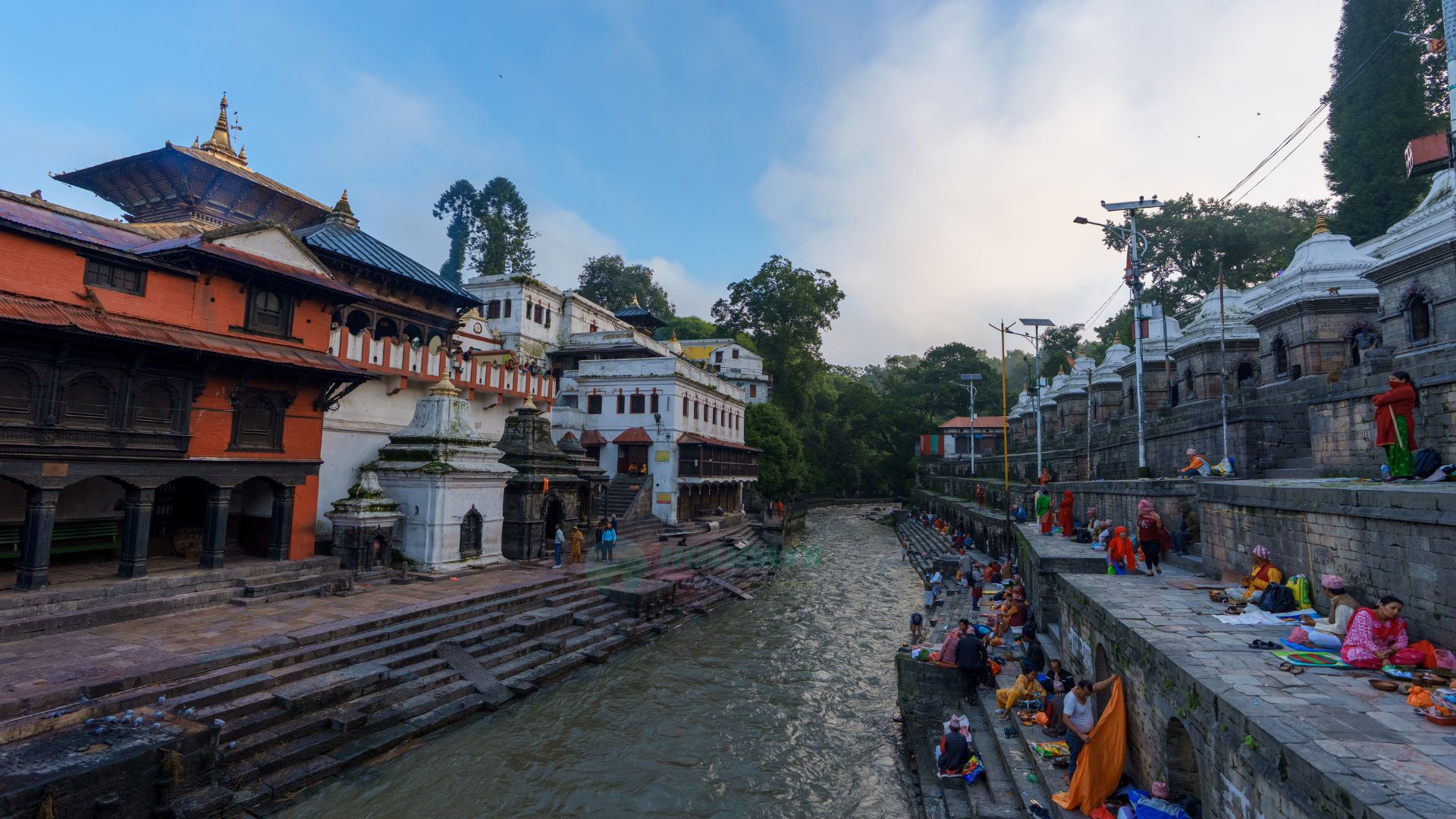
Temperatures hover around 12°C to 25°C. Rain is rare. The Bagmati runs lower than in monsoon months, and the ghats are fully accessible.
November tightens the cold slightly, with morning temperatures dropping toward 7°C or 8°C. If you're arriving for the 4:30 AM puja booking window, bring layers.
The Bala Chaturdashi festival falls in November or early December (the date shifts with the lunar calendar), and it's one of the more extraordinary nights at Pashupatinath. Lamps burn through the darkness and devotees scatter seven kinds of grain along the forest paths of Mrigasthali in memory of departed souls.
It's a quieter festival than Shivaratri, but the atmosphere is deeply personal, almost intimate.
|
Month |
Avg. Temp (°C) |
Rainfall |
Crowd Level |
Key Event |
|
October |
12–25 |
Very low |
Moderate |
Dashain (valley-wide) |
|
November |
7–22 |
Minimal |
Low to moderate |
Bala Chaturdashi |
For anyone planning a first visit, October or November is the safest choice. The best time to visit Kathmandu in general overlaps with this window, so you can combine Pashupatinath with other heritage sites across the valley without weather disruptions.
December Through February: Cold Mornings, Sacred Nights
December brings the coldest mornings Kathmandu sees, sometimes dipping to 2°C or 3°C before dawn. The temple precinct is quiet. Fog occasionally settles over the Bagmati at sunrise, and the smoke from the cremation ghats hangs low and visible in the still air.
There's a particular quality to December mornings here that I'd describe as austere. The stone is cold underfoot. The bells sound sharper.
Pashupatinath Temple visiting hours don't change in winter, but the reduced daylight means the Bagmati Aarti at 6:15 PM takes place in near-total darkness.
Arrive by 5:30 PM for the western embankment, where the view is best. The oil flames and the glow of the aarti lamps against the dark river feel different in winter than in the long-light evenings of summer.
January is similar: quiet and cold. Good for a pilgrim who wants space.
February is when the year's most significant event approaches. Maha Shivaratri, the grandest night in the Pashupatinath calendar, falls in late February or early March depending on the lunar cycle.
If you're planning around Shivaratri, you need to understand what it means for the temple: over a million pilgrims arrive, Naga and Aghori sadhus gather from across India and Nepal, fires burn on every available ghat surface, and the inner sanctum operates at a pace and intensity found at no other time of year. The full festival calendar is worth studying before you commit to dates.
If Shivaratri is your reason for coming, book accommodation weeks in advance. The area around the temple fills completely.
|
Month |
Avg. Temp (°C) |
Rainfall |
Crowd Level |
Key Event |
|
December |
2–18 |
Negligible |
Low |
None major |
|
January |
2–17 |
Negligible |
Low |
None major |
|
February |
5–19 |
Very low |
High to Extreme (if Shivaratri falls here) |
Maha Shivaratri |
Maha Shivaratri: The Night That Defines the Temple's Year
It is told that on this night, Lord Shiva performed the cosmic dance of creation and dissolution, and that worship offered during the darkest hours carries the weight of a thousand ordinary prayers. Whether Shivaratri falls in late February or early March, the transformation of Pashupatinath is total.
Sadhus begin arriving days before. Naga babas, ash-smeared and silent, take positions along the ghats and in the Mrigasthali caves. Aghori and Vaishnav sadhus establish temporary camps. The smell of woodsmoke, incense, and marigold garlands saturates the air for a radius of several hundred meters around the main pagoda.
For the pilgrim, Shivaratri offers what no other night offers: the full intensity of a living Shiva pilgrimage site operating at its ancient maximum. The Bhatta priests perform continuous rituals in the inner sanctum.
The Rudrabhishek and Mahamrityunjaya puja are available, though demand is extreme and you should book at the south office as early as possible, ideally the day before.
Can tourists participate in Pashupatinath rituals during Shivaratri? Non-Hindus may view the main shrine only from across the river, and photography is forbidden at active cremation ghats. But the scale of the event means that much of the ritual life spills into the open, public spaces of the precinct. The Bagmati Aarti on Shivaratri night is the most attended of the year.
A practical note: if you're elderly or have mobility concerns, Shivaratri crowds are physically demanding. The paths are packed. Movement is slow. There's no quiet corner. If your purpose is the Mahamrityunjaya puja specifically and you need calm, consider coming a week before or after.
March Through May: Spring Warmth and Lingering Festival Energy
March, if Shivaratri hasn't already passed, carries the tail end of the festival's energy. Sadhus linger. The temple slowly returns to its daily rhythm. Temperatures climb toward 15°C to 28°C, and the light softens.
April and May bring rising heat. Kathmandu isn't tropical, but afternoon temperatures can reach 30°C in May, and the pre-monsoon haze reduces visibility. The Himalayan panoramas that frame the valley in October disappear behind a milky sky. The temple itself remains fully operational, and crowd levels are moderate to low.
If you're combining Pashupatinath with other destinations in Nepal (the Mustang region, Pokhara, Chitwan), spring is a reasonable window, though not the optimal one for the temple alone. The best time to visit Kathmandu for photography and comfort is still the October-to-March corridor.
|
Month |
Avg. Temp (°C) |
Rainfall |
Crowd Level |
Key Event |
|
March |
8–25 |
Low |
High (if Shivaratri) to moderate |
Maha Shivaratri (some years) |
|
April |
11–28 |
Increasing |
Low to moderate |
None major |
|
May |
15–30 |
Pre-monsoon showers |
Low |
None major |
What to do at Pashupatinath Temple during quieter spring months: walk the 108 shivalinga rows along the riverbank, visit the Vasuki shrine and Guhyeshwari temple, and cross the river to the Pandra Shivalaya. The main Pashupatinath guide covers these attractions in detail.
June Through September: Monsoon Season at the Sacred Precinct
I'll be direct: most travel guides tell you to avoid the monsoon season entirely. I think that's too simple.
The monsoon arrives in Kathmandu in mid-June and lasts through September. Rainfall is heavy, sometimes 300mm or more in July alone. The Bagmati swells. The ghats closest to the waterline become inaccessible. Paths through the Mrigasthali forest turn muddy. The air is thick, warm, and wet.
But the temple doesn't close. The sacred rituals at Pashupatinath continue on schedule. And the monsoon brings two significant Pashupatinath Temple festivals.
Teej (August): Women in red sarees fast and dance in the temple courtyards for marital well-being. The energy is communal, joyful, and deeply feminine. The courtyards echo with song. If you happen to be in Kathmandu during Teej, Pashupatinath is the place to witness it. The smell of wet stone and marigold is something you'll remember.
Janai Purnima (August): Sacred threads are changed, and the temple sees a surge of Hindu male devotees. The ritual has a different texture from Shivaratri, more personal, less spectacle.
|
Month |
Avg. Temp (°C) |
Rainfall |
Crowd Level |
Key Event |
|
June |
19–29 |
Heavy |
Low |
Monsoon begins |
|
July |
20–28 |
Very heavy |
Low |
None major |
|
August |
20–28 |
Heavy |
Moderate (Teej, Janai Purnima) |
Teej, Janai Purnima |
|
September |
18–27 |
Decreasing |
Low to moderate |
Late monsoon |
Pashupatinath Temple visiting hours remain the same during monsoon and entry fees are unchanged.
The honest downside of monsoon visits: leeches on the forest trails, slippery stone steps, reduced visibility for photography, and the possibility of flight delays at Tribhuvan International Airport. If you're elderly or have difficulty with uneven, wet surfaces, this might just not be the right season.
Planning Your Visit Around the Pashupatinath Temple Dress: Travel Guide
Before you settle on a month, settle on the practical details that don't change with the seasons.
Dress code: Modest clothing covering shoulders and knees. Remove shoes before entering shrine areas. Avoid leather near the sanctum. During festivals like Teej, you'll see women in full traditional dress, but the baseline expectation for all visitors is simple modesty. How to dress for a Pashupatinath Temple visit doesn't require special purchases, just awareness.
Entry fees:
|
Category |
Fee |
|
Nepali/Indian Nationals |
Free |
|
Other Nationalities |
NPR 1,000 |
Access restrictions: Non-Hindus may view the main shrine only from across the river. The inner sanctum, where the Bhatta priests perform the Rudrabhishek and other rites, is accessible only to Hindu devotees.
How to reach Pashupatinath Temple: Tribhuvan International Airport is 2 km away, a 10-minute taxi ride. From central Kathmandu, take a local bus from Ratna Park to Gaushala, then walk about 10 minutes. The location and map details are worth reviewing before you arrive, especially if you're navigating public transport for the first time.
Puja bookings: South office, 4:30 AM. Arrive early, especially during festival weeks. The Mahamrityunjaya puja is the most requested ceremony for those traveling with specific spiritual intentions, particularly rites connected to grief, healing, and release.
The Sadhus and the River: What the Season Reveals
Naga, Aghori, and Vaishnav sadhus reside year-round in the Mrigasthali caves and ashrams across the Bagmati. But their visibility shifts with the calendar. During Shivaratri, hundreds of sadhus converge from across the subcontinent. In July, you might encounter only a handful, sitting quietly in the rain.
The Bagmati itself tells the story of the season. In October, it runs low and slow, and the stone steps of the ghats descend fully to the water's edge. In August, the river fills its banks and the lowest ghats are submerged. The cremation rites continue on the upper platforms regardless.
If you're drawn to Pashupatinath as a place of anthropological and spiritual depth (and not just as a line item on a Kathmandu itinerary), the season you choose will determine what layer of the temple's life you see. The religious and cultural significance of the site is constant. The human expression of that significance shifts with every month.
Aligning Your Visit with Intention
The best time to visit Pashupatinath Temple is the time that serves your reason for coming.
If you're completing a Jyotirlinga yatra and the Mahamrityunjaya puja is your purpose, come in December or January. The cold will test your patience at the 4:30 AM booking window, but the quiet is worth it. You'll have space to pray.
If Maha Shivaratri is the experience you've waited for, plan around the February or March lunar date and accept the crowds as part of the devotion. The fires, the chanting, the million-strong gathering on the ghats, this is Pashupatinath at its most ancient and most alive.
If you're a first-time visitor to Kathmandu combining the temple with broader travel across Nepal, October is the most forgiving month. Clear skies, comfortable temperatures, and a temple operating at its daily rhythm without the intensity of a major festival.
And if you're a photographer or researcher drawn to the cremation ghats and the sadhu communities, the shoulder months (November, early March) give you access without the extremes of winter cold or festival chaos.
Key Considerations Before You Go
Pashupatinath Temple is a UNESCO World Heritage Site spanning 264 hectares of active sacred landscape. It is not a museum. The rites you witness, the pyres on the ghats, the bells in the sanctum, the sadhus in the forest, are not performances.
They are the continuous expression of over a thousand years of Shiva worship, referenced in ancient texts and inscriptions, maintained without interruption by the Bhatta priests and the communities that serve the temple.
The best time to visit Kathmandu for this temple depends on whether you need solitude or spectacle, warmth or austerity, festival energy or the steady pulse of daily worship. Every month offers access to the Bagmati Aarti, the ghats, and the 108 shivalinga rows.
The temple's doors open on the same schedule year-round. What the season gives you is context, atmosphere, and the particular quality of light and silence that shapes how you'll remember the threshold you crossed.